
 Image 1 of 1
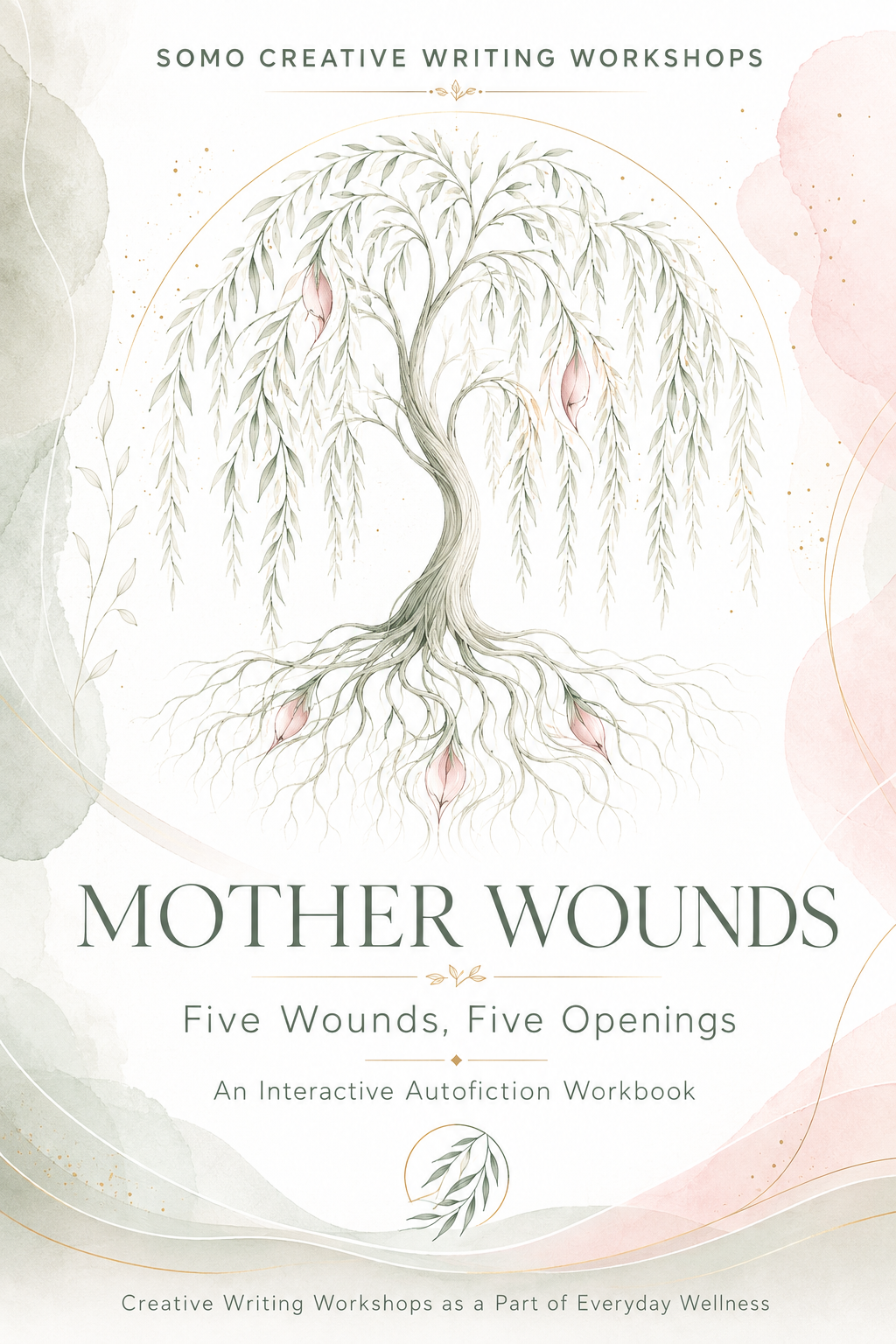
This workbook is for women ready to look directly at what happened between them and their mothers — not to diagnose it, and not to assign blame, but to understand the shape a wound takes so it stops quietly shaping everything else.
Five wounds are covered here. They're common enough to have names in the research literature, which doesn't make any one woman's version of them generic. The reading in each section comes from open-access, peer-reviewed research — named and linked so you can go further if you want to. The writing is auto-fiction: you'll build a character who carries a version of what you carry, and write her scene from the outside, at a slight distance, which is often where the truest things get said.
This workbook is for women ready to look directly at what happened between them and their mothers — not to diagnose it, and not to assign blame, but to understand the shape a wound takes so it stops quietly shaping everything else.
Five wounds are covered here. They're common enough to have names in the research literature, which doesn't make any one woman's version of them generic. The reading in each section comes from open-access, peer-reviewed research — named and linked so you can go further if you want to. The writing is auto-fiction: you'll build a character who carries a version of what you carry, and write her scene from the outside, at a slight distance, which is often where the truest things get said.